
The Trouble with Fusion
Nuclear Fusion Will Not Give Us Infinite Power
Energy is perhaps the most important input of industrial society. Ever since the taming of fire, mankind has in some sense dreamt of a infinite source of fuel that could be used to drive all sorts of human activities — from cooking, transport, the grinding of grain, to the melting of ore. All these activities require an input in the form of abstract energy, in each case represented in another form. Where to best source this energy has however always been changing. First it was most assuredly the human body itself (through the consumption of food) but it soon extended to the use of natural forces such as the wind (presumably through things like sailing) and the power of rivers and the potential energy bound within. In the mid-twentieth century this hope turned toward nuclear fission, the splitting of heavy atoms. Nuclear power is today a fact of society — even if debate rages on about its practicality or share of grid infrastructure. A long sought answer to the problems of nuclear fission has been to instead use nuclear fusion, that produces no radioactive waste and that needs only as its original input water. But just as nuclear fission did not give us cheap power nuclear fusion will not.
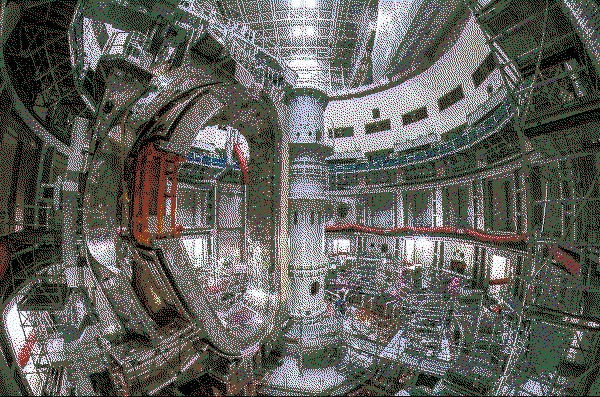
How Nuclear Power Works
Nuclear fusion, just like nuclear fission, makes use of the strong force to harness energy. As can be inferred from its name, the strong force is incredibly powerful amongst the fundamental forces of the universe; two orders of magnitude stronger than the electromagnetic force that governs over chemical bonds. The difference between fusion and fission is that while fission (and thus contemporary nuclear power) splits unstable heavy isotopes1 into smaller ones, fusion takes isotopes of hydrogen (the lightest element) and merges them together to create heavier helium. Both of these release energy in the process, but fusion is considerably harder to succeed in.
Sometimes, when talking about llm alignment or the internet, people will mention “instructions for how to make a nuclear bomb” as something very arcane and secret. In fact, it is technically quite easy — it simply requires a lot of resources.2 Nuclear power (and weapons) harness energy by concentrating a lot of fission-material in a small space. The difficultly in doing this for weapons comes from how to quickly concentrate this before the explosion rips the bomb apart, and for nuclear power the difficultly is in controlling the chain reaction — getting a usable amount of power without letting the process spiral out of control.
For nuclear fusion, the process is reversed. Getting fusion to occur at all is quite difficult, and even when you can make it happen it is even harder to (i) create more energy3 than was used to create the reaction and to (ii) extract that energy into some useful form. The American National Ignition Facility is the only experiment that has generated a net-positive amount of energy through fusion, and it did so by firing 192 laser beams into a small pellet. How does one create electricity from such a process? An alternative approach, magnetic confinement, simply heats a homogeneous mass of hydrogen plasma to very high temperatures — insulating it from its surroundings by a very strong magnetic field that keeps it floating in a vacuum. The very high heat means that ions will strike each other randomly at very high velocities, fusing together in the process.
The reason that the hydrogen atoms need to have a very high (relative) velocity is so that they can overtake the initial resistance of the electromagnetic force. Regular hydrogen is only composed of a single proton, and since it is positively charged it will push away any other positively charged hydrogen. Simple hydrogen atoms are also incredibly hard to “hit” because of their very small size. Using larger elements — like helium — makes the repelling electromagnetic force even larger, so instead one uses an isotope of hydrogen that includes either one or two neutrons, deuterium and tritium respectively. Deuterium is naturally occurring in small amounts and can therefore be extracted from plain water in a comparatively simple process, but tritium is faintly radioactive and thus does not exist naturally on earth but is only produced in nuclear reactions. Any fusion plant thus needs to create its own tritium if it wants to be successful commercially.
One of the largest problems with contemporary nuclear power is the (largely unanswered) question of nuclear waste. Of the 31 nations of the world who posses nuclear power, only Finland has a complete solution for long-term storage of waste. This is not a problem with nuclear fusion. Fusion reactions create neutron flux that irradiates materials, but those materials do not have the same intensities of radiation as fissile (or formerly fissile) material. The direct byproducts of fusion, largely helium-3 (an isotope of helium with one neutron) is not radioactive and can be used in various industrial applications or vented into the atmosphere.
Why It Will (Not) Fail
Fusion will not be built for a long time. There is an astounding and impressive amount of work being done, much of it useful, but none of it is even in the same league as a commercial power plant, not to mention ballparks. As mentioned above, only a single facility has ever reached a net-positive amount of energy production. Saying that you will soon be building power plants is like keeping a campfire lit in the rain using a flamethrower and then saying you are going to build a coal power plant using your patented 24/7-flamethrower-method.
Even then, building futuristic has-yet-to-even-be-done-in-labs reactors at commercial scale would not give us limitless energy. There are many levels of break-even in fusion; the most simple one is of course the question of raw energy, but much of that energy is in hard-to-harvest forms like radiation of various kinds.4 Only the amount of energy released as heat can be reasonably used to boil water and drive a steam engine to create electricity. There are enormous energy losses in this process — fission plants can only harvest a third of the (thermal) energy produced, leaving ~66% as waste heat. Beyond that a power plant needs to be able to produce as much power as was used in the production of deuterium fuels, for the extraction and transport of lithium-6,5 the construction and maintenance of the facility itself, and various utility process related to all of the above.
Shrinking the cost of building fusion reactors is meaningless because their operational costs are so large and their benefits non-existent for power production (as of yet). The more you run a reactor, the more energy is lost and the more money you have burned. It is like solving our flamethrower-campfire by making the charcoal cheaper; it does not solve the fundamental underlying problem with fusion power which is that it does not produce energy. From the above article:
Energy Singularity has some advantages. With their stronger magnets, design experience, and domestic supply chain, they believe their reactors will be the most cost-effective in the world. […] Having already built a first-in-class hts tokamak under budget and on time, I trust their estimate.
Lowering costs does not improve your cost-effectiveness if the costs of your reactor are theoretically infinite. This is fine of course for research and development, and is thus not useless, but I can easily build a non-energy-producing fusion reactor myself for a far smaller budget than Energy Singularity’s.
But fear not, for we actually have a working form of limitless green fusion power that can supply the world, is tried-and tested, and has already been deployed at scale: its called renewables.
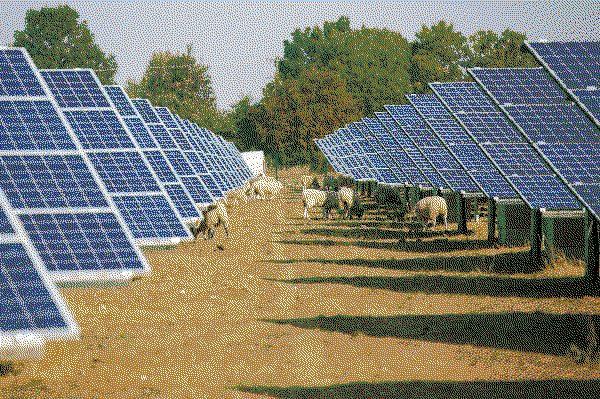
The problem with energy production is not whether or not it is feasible, but at what cost energy can be produced. Another huge source of power would be if everyone constantly rode electricity-producing bikes at home, but we have all collectively agreed (through the market) that there are more beneficial uses of our time and resources. If you were paid $100 for every hour you spent on such a bike there would likely be a lot more people doing it — thankfully there are better ways of producing large amounts of power cheaply. The main cost of power plants is in their construction, maintenance, and fuelling (if relevant) but for some reason that is conveniently forgotten when talking about fusion.
All renewable power sources ultimately derive their power from the largest and most efficient fusion reactor we are familiar with, the sun. Even fission power, that can in rough terms be summarised as
We found a rock that gets really hot no matter what, and if we put the rock in water it starts to boil and gives us infinite power.
is quite hard to do commercially because it requires expensive machinery, safety equipment, and facilities on top of the cost of obtaining this rock. That building a super-expensive plasma vessel surrounded by superconducting magnets would be cheaper is absurd. By contrast wind power has been profitable for centuries — powered by the sun as wind currents are created through the uneven distribution of sunlight across the planet.

Conclusion, or Rather a Punchline
This is not to say that fusion is “doomed” or will never succeed, it is rather just that (i) it is really quite difficult to do as a way to extract energy and thus will likely not happen soon and (ii) would not magically be able to supply everyone with cheap power. Fusion has always been a few-decades away because, while fusion itself is entirely possible to do in a lab, it is difficult to use as an energy source. It did not take all that much effort to go from nuclear weapons to nuclear power (1945–1951) but we have now had fusion bombs for 75 years and have yet to produce electricity from it. That the physics allow for the possibility means that it is hard to comprehend how nobody has just “done it” yet, but so far it has escaped the clutches of the world’s most talented engineers for three quarters of a century. Lewis Strauss said in 1954 that
It is not too much to expect that our children will enjoy in their homes electrical energy too cheap to meter[.]
This is the same sort of language used to describe a future of fusion power. It did not come to pass. Electricity seems to be one of the worst offenders for Jevons’ paradox — it was in fact the production of coal for energy that Jevons originally refereed to. Instead of thinking of a future technology that will swoop in and solve all of our problems with energy (cost, environmental impact, et cetera) we should focus on the solutions that are available today. The world’s energy system needs reform; it needs to be more integrated, cleaner, and in many ways larger as well. But most of all further developments need to be made in “the fifth fuel”, namely efficiency.
Even when fusion power inevitably6 becomes a reality, it will likely fulfil a similar niche as fission plants — used by advanced high-tech economies to provide stable base-load power and reduce dependence on energy imports. It will not solve the world’s problems overnight. Nuclear power plants famously take quite a long time to build, and a delicate high-tech machine like a fusion reactor is no different. Once commercial power becomes possible it will thus take many years, perhaps as long as a decade, to get up to speed in large-scale integration with the grid. Don’t hold your breath. ❦
Footnotes:
Chemistry/physics-speak for “versions of elements”.
And building delivery systems for a nuclear weapon is even harder; The United States spent more money on the design and construction of the b-29 Superfortress bomber aircraft that ultimately bombed Hiroshima and Nagasaki than it did on the Manhattan project.
Energy in the strict thermodynamic sense.
Like the aforementioned neutron flux, but also X-rays and gamma-rays.
An isotope of lithium that is needed for the production of tritium.
I say inevitably because it seems like there is steady progress being made and of course no hard barriers to seeing it solved. Whether or not it ever becomes a significant share of global power production is however a different question.